Is Your Backup Power Strategy Still Enough?
Is Your Backup Power Strategy Still Enough?
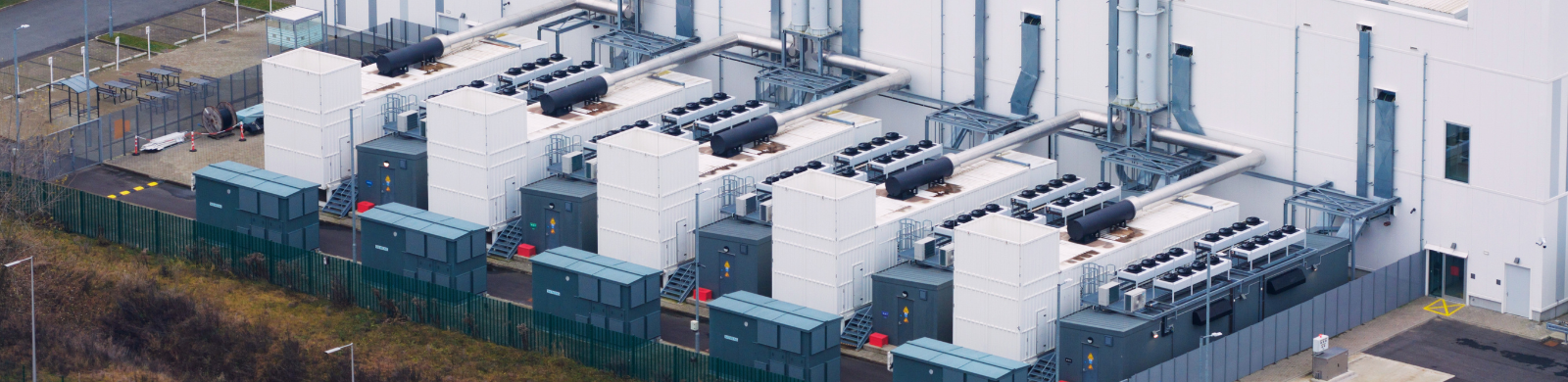
Backup power systems are often installed, tested, and then quietly trusted for years.
But the electrical environment around them is changing.
With rising load demand from scaling operations and greater uptime expectations, facilities are reassessing whether their existing standby strategy is still aligned with today’s risks.
Here are five practical questions to evaluate whether your backup power plan is built for current conditions—not yesterday’s.
1. Has Your Critical Load Increased Since Installation?
Many facilities size generators based on the load profile at the time of installation.
Since then, you may have added:
- Automation systems
- Variable frequency drives
- Additional process equipment, especially with more motor loads
- Expanded cooling systems
- IT infrastructure
Even modest growth can change startup requirements and transient response demands.
If your facility has expanded but your generator has not been reevaluated, it may be operating closer to its limits than you realize.
A load study every few years can confirm whether your system still provides adequate capacity and stability under full transfer conditions.
2. Are You Accounting for Nonlinear Loads?
Modern plants use more inverter-driven equipment than ever before. VFDs, robotics, and electronic controls introduce harmonic content and nonlinear loading characteristics that older generator systems may not have been designed to manage.
When generators serve nonlinear loads, performance depends heavily on:
- Subtransient reactance characteristics
- Voltage regulation capability
- Short-circuit performance
- Stability under load steps
Alternators engineered with low subtransient reactance designs can help reduce voltage distortion and improve system performance under these conditions.
If your standby system was installed before widespread inverter adoption, it may be worth reviewing compatibility with today’s load profile.
3. Can Your System Handle Full-Load Step Changes?
In a true outage, transfer is rarely gradual.
Facilities may go from zero generator load to significant demand within seconds. That places stress on both the prime mover and the alternator.
Evaluate whether your system is designed for:
- Stable voltage during sudden load acceptance
- Rapid recovery from transient events
- Adequate short-circuit protection
- Reliable excitation independent of load fluctuations
Digital voltage regulators with robust excitation systems are often specified in mission-critical environments to ensure stable output under dynamic conditions.
If your current setup struggles during testing—or if testing has become infrequent—that’s a signal worth addressing.
4. When Was the Last Time You Reviewed Runtime Assumptions?
Backup systems are commonly sized for emergency bridging—short-duration events.
Grid conditions are evolving in some regions. Weather events, capacity constraints, and infrastructure upgrades can extend outage durations beyond historical norms.
Ask:
- Is your alternator operating within thermal limits?
- Is your fuel supply sufficient for extended runtime?
- Is your cooling system rated for continuous-duty operation?
- Are maintenance intervals aligned with actual usage?
In some cases, facilities are shifting from pure standby strategies to configurations capable of extended or even prime-power operation.
Alternator platforms originally developed for mission-critical applications, such as data centers, are increasingly being evaluated in broader industrial contexts for this reason.
5. Are You Treating Backup Power as Strategic Infrastructure?
Generators are sometimes viewed as insurance—equipment you hope never to use.
But as downtime costs rise and automation increases dependency on stable power, backup systems are becoming operational assets rather than emergency accessories.
Facilities that take a proactive approach typically:
- Conduct periodic load audits
- Review generator sizing after process changes
- Confirm inverter compatibility
- Evaluate motor efficiency and critical cooling loads
- Keep spare parts on hand for quick repairs of susceptible items
- Upgrade aging equipment before failure
Premium efficiency motors, inverter-duty platforms, and modern alternator designs all play a role in building a resilient electrical system—not just responding to outages.
A Practical Next Step
Backup systems that were perfectly adequate ten years ago may still be functional—but that doesn’t always mean they are optimized for current operating conditions.
A structured review of load growth, nonlinear equipment, transient performance, and runtime capability can identify gaps before they become operational problems.
The goal isn’t overdesign.
It’s alignment.
Because in today’s environment, power reliability is no longer just about surviving an outage. It’s about maintaining continuity in a system that depends more heavily on electricity than ever before.