Air: It’s Not Just for Breathing
Air: It's Not Just for Breathing
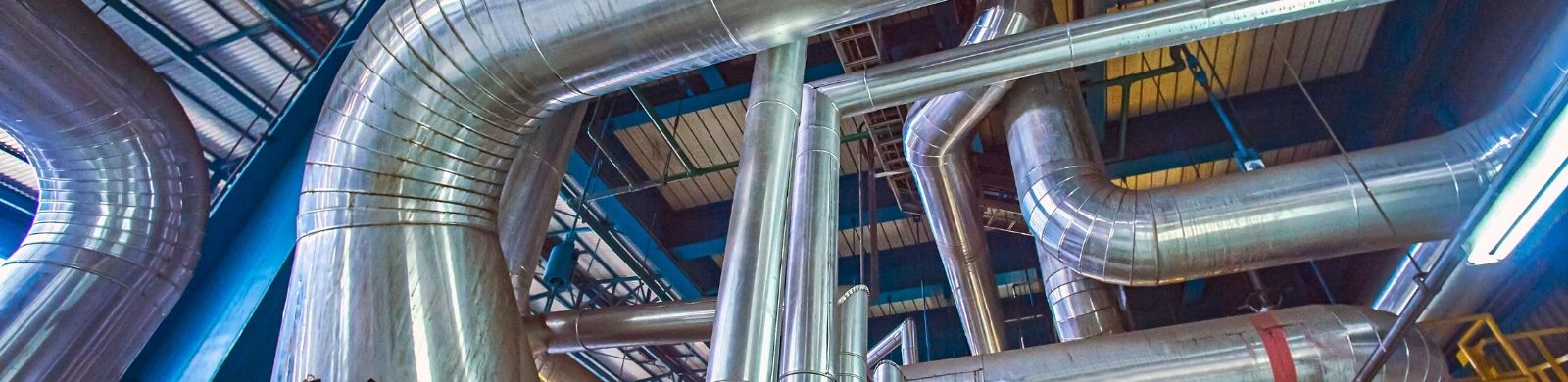
Walk through almost any manufacturing facility and you'll immediately notice the machines.
Conveyors transport products from one station to the next. Pumps circulate water through cooling systems. Overhead cranes quietly move massive steel coils across production floors, while electric motors drive equipment that rarely stops moving.
What you probably won't notice is the air.
Unlike conveyors or production lines, air has no clearly defined path. It doesn't travel on rollers or rails, and there are no painted lines on the factory floor showing where it goes. Yet every second of every day, millions of cubic feet of air move through industrial facilities, quietly performing jobs that are just as essential as the machines themselves.
It cools equipment.
It removes heat.
It carries away contaminants.
It controls humidity.
It protects products.
It keeps people safe.
And perhaps most importantly, it helps keep production moving.
In many facilities, production would come to a standstill long before anyone noticed a conveyor had stopped—because the air stopped moving first.
More Than Ventilation
When most people hear the words industrial ventilation, they think about employee comfort.
In reality, ventilation systems are designed around the needs of the process itself.
Every electric motor, variable frequency drive, compressor, and electrical cabinet generates heat during normal operation. Marathon® motors and CONTROLMAX™ drives are part of these broader motor and control systems found throughout industrial facilities. If that heat is allowed to accumulate, operating temperatures rise, reducing equipment efficiency and placing additional stress on bearings, insulation systems, lubricants, and electronic components.
Moving air isn't simply about making a building cooler.
It's about removing heat faster than equipment produces it.
That principle appears throughout manufacturing, often in places most people never think to look.
The Perfect Coat of Paint Begins With Air
Imagine walking through an automotive paint booth.
The robots are impressive, spraying each vehicle with remarkable speed and precision.
But the quality of the finish depends just as much on something invisible: Air.
Paint booths rely on carefully controlled airflow to move overspray away from painted surfaces while preventing dust and airborne particles from settling on fresh paint. Air enters the booth through filtered ceiling systems, flows uniformly around the vehicle, and exits through exhaust systems below or behind the work area.
Without that controlled airflow, tiny particles could become trapped in the finish, reducing product quality long before the vehicle reaches final inspection.
The customer sees flawless paint.
Behind the scenes, airflow helped make it possible.
In a Bakery, Air Helps Manage Heat
Now step into an industrial bakery.
The source of heat is very different, but the challenge is familiar.
Commercial ovens operate for hours at a time, releasing heat into an environment already filled with motors, conveyors, controls, and other production equipment. As products move from mixing and forming through baking and cooling, managing temperature and airflow becomes part of keeping the entire process moving.
Ventilation systems help remove excess heat from production areas, while exhaust and make-up air systems manage the large volumes of air associated with industrial ovens. Cooling systems then become important downstream, where products may need to shed heat before packaging or further processing.
And the equipment surrounding those processes faces requirements beyond temperature alone. In food and beverage applications where sanitation and washdown are priorities, stainless-steel motor construction can help address corrosion and contamination concerns while supporting the hygienic design of production equipment. Marathon Electric's stainless-steel motor offerings are designed for demanding washdown and food-processing applications.
At the same time, conveyor motors, fans, pumps, and other electrically driven equipment still have to operate reliably as temperatures around the production line rise.
In other words, the oven may be where heat is supposed to be. Keeping that heat from becoming everyone else's problem is where airflow comes in.
Air Matters Before the Page Is Printed
Paper production presents an entirely different challenge.
Instead of extreme heat, paper manufacturers must carefully balance heat, humidity, and moisture throughout the production process.
Large drying sections remove water from paper using heated cylinders, while ventilation systems remove humid air generated during drying. Dust collection systems help capture airborne fibers that could affect both equipment reliability and workplace safety.
Even small changes in humidity can influence paper quality, making airflow an important part of maintaining consistent production.
Once again, the process depends on something most people never notice.
In Food Processing, Air Protects More Than Equipment
Food manufacturing introduces another layer of complexity.
Here, airflow isn't only about cooling equipment.
It also helps protect the product itself.
Ventilation systems remove heat generated during cooking and baking processes while helping manage moisture levels throughout production areas. In facilities producing ready-to-eat foods, carefully designed airflow patterns help reduce the movement of airborne contaminants between processing zones. Positive air pressure may be maintained in certain rooms to help protect products during packaging and handling.
The result is a manufacturing environment where airflow contributes not only to equipment reliability, but also to food quality and safety.
Even the Internet Depends on Air
Perhaps nowhere is the importance of air more surprising than inside a data center.
From the outside, these buildings appear quiet and unremarkable.
Inside, thousands of servers operate continuously, generating tremendous amounts of heat.
Without carefully engineered airflow, server temperatures would rise rapidly, reducing reliability and increasing the risk of equipment failure.
High-capacity fans continuously move cooled air through server racks while hot air is removed and returned to cooling systems before the cycle begins again. Every email, video call, online purchase, or cloud-based application ultimately depends on air moving through those buildings.
The digital world, in many ways, runs on fans.
Different Industries. Different Demands. The Right Equipment Matters.
A bakery, a paper machine, a data center, a warehouse, and a paint booth may have very little in common.
But throughout each facility, air has a job to do.
It may remove process heat. Control humidity. Carry contaminants away from a production area. Cool equipment. Maintain product quality. Or simply keep temperatures within the conditions required for reliable operation.
And moving that air requires equipment of its own.
Fans, blowers, cooling towers, exhaust systems, and other air-moving equipment depend on electric motors to turn airflow requirements into actual movement. But just as the applications throughout this article are different, the demands placed on those motors can be different, too.
Some air-moving applications operate continuously. Others may encounter dust, moisture, elevated ambient temperatures, or demanding duty cycles. And where airflow requirements change throughout the day or production cycle, variable-speed operation can give facilities greater control over how much air is moved and when.
That is where the motor-and-drive system becomes part of the airflow strategy.
Marathon Electric's Air Moving solutions support applications including fans, blowers, and cooling towers, with motor designs suited to a range of industrial operating environments. Where variable-speed control is required, ControlMax™ drives can help match motor speed to the needs of the application rather than operating at a single fixed speed.
The industries may be different. The reason for moving the air may be different. Even the amount of air required may change.
But there is one thing they share:
When airflow matters to the process, so does the equipment responsible for moving it.
Most of the time, nobody notices the air.
That's usually a sign that everything is working exactly as it should.