When Heat Becomes the Enemy: Why Cooling Is a Production Issue, Not a Comfort Issue Especially in Electric Motors
When Heat Becomes the Enemy: Why Cooling Is a Production Issue, Not a Comfort Issue Especially in Electric Motors
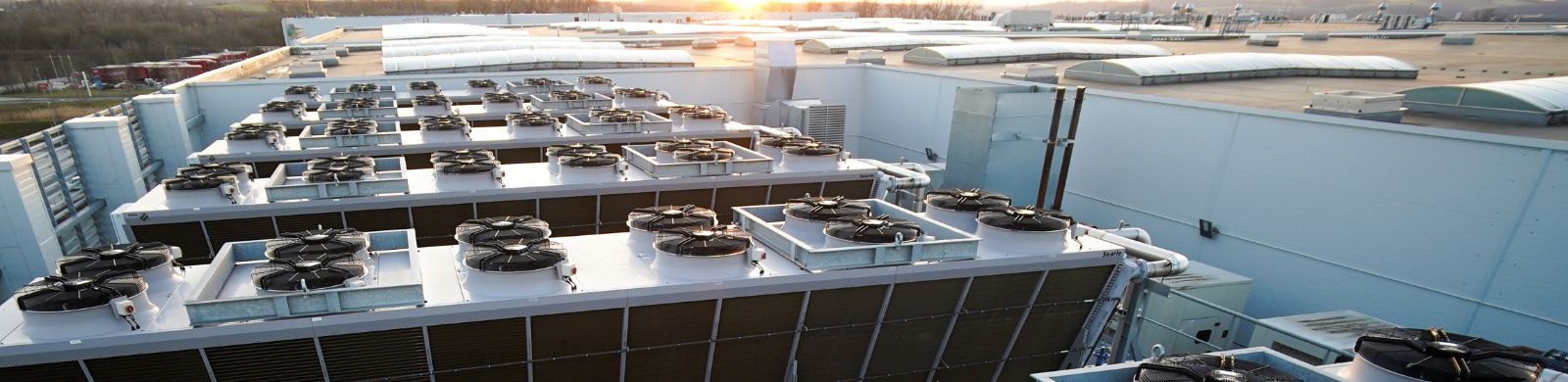
When temperatures climb during the summer months, most people think first about comfort. Air conditioning systems work harder, fans run longer, and facilities look for ways to keep employees safe in increasingly hot conditions. While worker comfort is certainly important, it is rarely the primary reason industrial facilities invest in ventilation systems, cooling towers, exhaust fans, and process airflow.
The greatest beneficiary of proper air movement is often the equipment itself.
Every electric motor, pump, compressor, gear reducer, and variable frequency drive (VFD) generates heat as a natural byproduct of operation. Under normal conditions, heat is continuously dissipated into the surrounding environment through the motor frame, internal cooling fan, or external ventilation. But as ambient temperatures rise and airflow becomes restricted, that balance begins to change. Equipment has a more difficult time releasing the thermal energy it produces, causing internal operating temperatures to increase.
Unlike mechanical failures that often announce themselves with unusual noise or excessive vibration, heat is a quiet problem. It accumulates gradually, placing additional stress on insulation systems, bearings, lubricants, seals, and electronic components long before a failure becomes obvious. The result is not simply a hotter motor—it is accelerated aging of critical equipment, reduced efficiency, and an increased likelihood of unplanned downtime.
For facilities operating continuously throughout the summer, cooling is not simply an environmental concern.
It is a reliability strategy.
Heat Is More Than a Temperature Problem
Industrial motors are designed to operate within specific thermal limits. Marathon Electric’s standard listed motors are suitable for ambient temperatures up to 40°C (104°F). When an application operates above that threshold, however, replacing the motor is not necessarily the only option. Through Marathon Electric’s MOD Central Motor Modification Program, non-explosion-proof motors can be evaluated for higher ambient conditions and, depending on the motor and application, may be re-rated—including changes to the service factor—to accommodate the operating environment. Because motor capabilities vary, the appropriate rating or modification must be determined through an application review. But why?
Because electrical losses naturally generate heat every time a motor operates.
Copper losses in the stator windings, iron losses in the magnetic core, friction within bearings, and ventilation losses all contribute to the motor's operating temperature. Under ideal conditions, these losses remain within acceptable limits because the surrounding air continuously removes excess heat.
However, summer changes those conditions.
Higher ambient temperatures reduce the temperature difference between the motor surface and the surrounding air, making heat transfer less effective. Dirty cooling fins, clogged ventilation paths, enclosed electrical rooms, or inadequate building ventilation further reduce the motor's ability to reject heat.
Even seemingly minor temperature increases can have significant long-term consequences. Electrical insulation systems experience thermal aging, lubricants degrade more quickly, and bearings operate under greater thermal stress. According to the long-established Arrhenius aging principle, every sustained increase in operating temperature can significantly reduce insulation life, making temperature control one of the most important factors affecting long-term motor reliability.
Heat also affects equipment beyond the motor itself.
Variable frequency drives rely on electronic components that generate substantial heat during operation. Control panels require adequate airflow to prevent thermal buildup, while bearings and lubricants lose effectiveness as temperatures continue to rise. In many cases, repeated thermal overload trips or nuisance shutdowns are not isolated electrical problems—they are symptoms of insufficient cooling somewhere within the overall system.
Airflow Is Part of the Production Process
This is why industrial airflow should never be viewed solely as a building utility.
Ventilation systems, roof exhaust fans, make-up air units, process blowers, and cooling towers all contribute directly to equipment reliability by removing excess heat from production environments.
Consider a steel mill. The focus naturally falls on blast furnaces and rolling equipment, yet much of the facility depends on systems quietly managing heat throughout the process. Cooling fans protect motors operating near high-temperature equipment. Ventilation systems help remove radiant heat from production areas. Cooling water systems reject enormous quantities of process heat through cooling towers before the water can be recirculated back into the manufacturing process.
That need for airflow extends well beyond the furnace itself. Electrical rooms, motor control centers, material-handling areas, and other supporting equipment throughout the facility can all depend on ventilation to prevent heat from accumulating around critical systems. In other words, keeping a steel mill running is not only about managing the extreme heat created by the process—it is also about controlling where that heat goes.
Even industries not traditionally associated with "air moving" depend on proper airflow every day.
When these systems perform well, they are almost invisible.
When they fail, temperatures rise, equipment operates under greater stress, and reliability begins to decline long before anyone notices a problem.
Summer Is the Right Time to Pay Attention
Heat-related failures rarely develop overnight. In many cases, warmer ambient conditions simply make existing problems harder for equipment to tolerate.
- Restricted ventilation.
- Dirty cooling passages.
- Plugged filters.
- Worn bearings creating additional friction.
- Improper lubrication.
- Overloaded motors operating near their thermal limits.
Any of these conditions can affect equipment throughout the year. Higher summer temperatures simply leave less room for them to go unnoticed.
That is why seasonal changes are a useful reminder to review equipment condition—but they should never replace a regular preventive maintenance program. Motor cooling paths should be kept free of dirt and debris, operating conditions should be monitored, and inspection and maintenance practices should follow the recommendations provided in the applicable installation and operating manual.
Lubrication deserves particular attention. Relubrication intervals and practices should be appropriate for the motor and its application, and more grease is not necessarily better. Overgreasing can create its own problems, which is why manufacturer recommendations for lubricant type, quantity, and interval should be followed rather than treating additional grease as additional protection.
The goal is not to prepare a motor only for summer.
It is to maintain the equipment properly throughout the year so that when operating conditions become more demanding, preventable maintenance issues do not become production problems.
Engineering for Harsh Environments
Of course, not every application operates under the same conditions.
Facilities exposed to airborne contaminants, moisture, demanding duty cycles, or other harsh operating conditions may require motors designed for more demanding environments. Marathon Electric's Blue Chip® XRI® Severe Duty motors are built for these applications with 100% cast-iron construction, internal and external epoxy paint, and a MAX GUARD® Class H insulation system. By comparison, Marathon's Globetrotter® general-purpose motors use a Class F insulation system. These differences in construction and insulation are among the factors to consider when matching a motor to its application and operating environment.
Motor selection, however, does not replace proper thermal management. Ambient temperature, ventilation, cooling, loading, duty cycle, and other application requirements must still be considered when evaluating how a motor will operate in a particular installation.
Rather than treating motor selection and environmental cooling as separate considerations, facilities can approach reliability from both sides: managing the environment around the equipment while selecting a motor whose construction and design are appropriate for the demands of the application.
As manufacturing facilities continue increasing automation, extending production schedules, and operating equipment closer to capacity, thermal management will only become more important.
Cooling is no longer simply about creating a comfortable work environment.
It is about protecting production continuity.
Because when heat becomes the enemy, airflow becomes one of industry's most valuable reliability tools.